Things to See & Do in North Dakota
Shankar's International Children's Competition (SICC)
K. Shankar Pillai (July 31, 1902–December 26, 1989) was a famous cartoonist. He brought out a political magazine called ‘Shankar’s Weekly’. Under the auspices of this magazine, a competition called the Shankar’s International Children’s Competition was organized in 1949. It invited paintings and writings from children in India. Children sent about 3,000 entries. The following year the competition was thrown open to children from all over the world.
Today, the competition has grown and about 1,60,000 entries are received from over 130 countries. The entries are judged by an international jury. The prizewinning entries are compiled in a volume called the ‘Shankar’s Children’s Art Number’. The competition is open to children all over the world below the age of 16 years. There is no entry fee and competitors are free to choose the theme/subject they are interested in, or like most, for their paintings/ drawings/writings.
SOS Children's Villages - USA Family Dinner Time Art Contest
The Family Dinner Time Art Contest celebrates family dinner time and kicks off on Thanksgiving each year. Children may submit artwork of their family at dinner time to win a home computer. Artwork can be in any form, but must illustrate a family eating together. For sculptures and other difficult-to-ship items, please send a photo as opposed to the actual artwork.
A winner will be selected from each age group: preschool ages 1-7; grade school ages 8-12; and high school ages 13 -17.
Teaching Tips & Ideas
How I Teach a Large Family in a Relaxed, Classical Way: Fine Arts
Ideas for incorporating fine art education into a large homeschool family curriculum.
Masterpiece Art Instruction
Masterpiece Art Instruction offers a free newsletter, "Teach Art at Home," along with free projects and lessons, art instruction CDs, and more
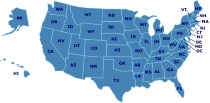
Looking for Another State?
Featured Resources
As an Amazon Associate, we earn from qualifying purchases. We get commissions for purchases made through links on this site.

The Unprocessed Child: Living Without School
This book shows how school is not necessary for a child to gain learning, socialization, or motivation. It offers a look at radical unschooling, a way of educating children without coercion, curriculum, or control. This look at a child who grows from childhood to adulthood with the experience of self-direction is a celebration of the success of unschooling. Covers topics such as parenting, self-discipline and self-motivation, socialization, and more.

Secret of Childhood
Maria Montessori describes the child with warmth and the exactness of a scientist. She also discusses the array of materials and techniques needed to release his learning potential.

Perrine's Sound & Sense: An Introduction to Poetry
Perrine's Sound and Sense is a fantastic book for studying poetry with your children. It is a great resource for high school students. It includes clear and thorough explanations of devices, forms, how to analyze poetry, and more, as well as a huge variety of poems, both classic and contemporary.

The Exhausted School: Bending the Bars of Traditional Education
These 13 essays, presented at the 1993 National Grassroots Speakout on the Right to School Choice, illustrate how education reform actually works. Written by award-winning teachers and their students, these essays present successful teaching methods that work in both traditional and nontraditional classroom settings. “Gatto’s voice is strong and unique.” — Thomas Moore, author of Care of the Soul

Conquering Chronic Disorganization
The real-life stories of chronically disorganized people and the ground breaking, easy-to-learn organizing methods used to end their chronic disorganization in the area of residential clutter, office organizing, paper management, storage, and time management. Conquerings pages includes an extensive index, user-friendly summaries, quick tips, helpful photographs, and a resource section of products and organizations.