Community Colleges
Many community colleges around the country have opened their doors to homeschooled teenagers, giving them an opportunity to start their college careers early, to gain classroom experience and college credit, to challenge them with more difficult materials, and to expand their horizons. Many parents look to community colleges to provide instruction in materials that they are not well suited to teach themselves.
Links
American Association of Community Colleges (AACC)
Founded in 1920, the American Association of Community Colleges (AACC) has, over four decades, become the leading proponent and the national “voice for community colleges.” Today, AACC’s membership represents close to 95 percent of all accredited U.S. two-year community, junior and technical colleges and their 10.5 million students, as well as a growing number of international members in Puerto Rico, Japan, Great Britain, Korea, and the United Arab Emirates. The colleges are the largest and fastest-growing sector of U.S. higher education, enrolling close to half (45 percent) of all U.S. undergraduates. AACC supports and promotes its member colleges through policy initiatives, innovative programs, research and information and strategic outreach to business and industry and the national news media.

And What About College?: How Homeschooling Can Lead to Admissions to the Best Colleges & Universities
Get all your questions about helping your homeschooled student apply and get accepted to college answered with this resource. It discusses transcripts, diplomas, education choices, online colleges, and more. If you are worried about whether your homeschooled student can have a successful college search, then this book will help allay those fears and offers good support and information.
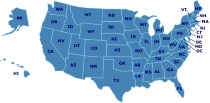
Looking for Another State?
Featured Resources
As an Amazon Associate, we earn from qualifying purchases. We get commissions for purchases made through links on this site.

The Unprocessed Child: Living Without School
This book shows how school is not necessary for a child to gain learning, socialization, or motivation. It offers a look at radical unschooling, a way of educating children without coercion, curriculum, or control. This look at a child who grows from childhood to adulthood with the experience of self-direction is a celebration of the success of unschooling. Covers topics such as parenting, self-discipline and self-motivation, socialization, and more.

Secret of Childhood
Maria Montessori describes the child with warmth and the exactness of a scientist. She also discusses the array of materials and techniques needed to release his learning potential.

Perrine's Sound & Sense: An Introduction to Poetry
Perrine's Sound and Sense is a fantastic book for studying poetry with your children. It is a great resource for high school students. It includes clear and thorough explanations of devices, forms, how to analyze poetry, and more, as well as a huge variety of poems, both classic and contemporary.

The Exhausted School: Bending the Bars of Traditional Education
These 13 essays, presented at the 1993 National Grassroots Speakout on the Right to School Choice, illustrate how education reform actually works. Written by award-winning teachers and their students, these essays present successful teaching methods that work in both traditional and nontraditional classroom settings. “Gatto’s voice is strong and unique.” — Thomas Moore, author of Care of the Soul

Conquering Chronic Disorganization
The real-life stories of chronically disorganized people and the ground breaking, easy-to-learn organizing methods used to end their chronic disorganization in the area of residential clutter, office organizing, paper management, storage, and time management. Conquerings pages includes an extensive index, user-friendly summaries, quick tips, helpful photographs, and a resource section of products and organizations.